
What is Digital PR? Why is it So Crucial for Businesses?

Digital PR is all about how you use the internet to raise a brand’s profile – think online publications, social media sites, blogs and search engines. It’s a mix of traditional PR and digital tech to get your brand out there, build relationships with online folks and influence how they see you through targeted and measurable campaigns.
As people are increasingly looking for information online, digital PR has become a must-have for modern businesses. The rise of digital media has completely changed how businesses talk to their customers – from traditional press releases to dynamic social media campaigns and online content marketing.
Interestingly, a HubSpot survey found that over 80% of people research products online before buying, which makes digital PR efforts absolutely critical for getting your brand seen.
TL:DR
- Digital PR is a tried and tested way to boost a brand’s online presence through stuff like social media, online publications and search engines.
- Unlike traditional PR, which focuses on print media, TV and in-person events, digital PR uses online methods like content marketing and social media to build brand visibility and get people talking about you.
- The benefits are clear: better SEO through high-quality backlinks, a bigger brand following, improved online reputation and the chance to talk to your target audience in real time.
- Businesses serious about making it in the digital world should definitely consider teaming up with a digital PR agency to design and execute effective digital PR strategies that drive traffic, generate leads and fuel long-term growth.
How Does Digital PR Differ from Traditional PR?
At the heart of both PR (public relations) and digital PR is building strong relationships between businesses and their audiences.
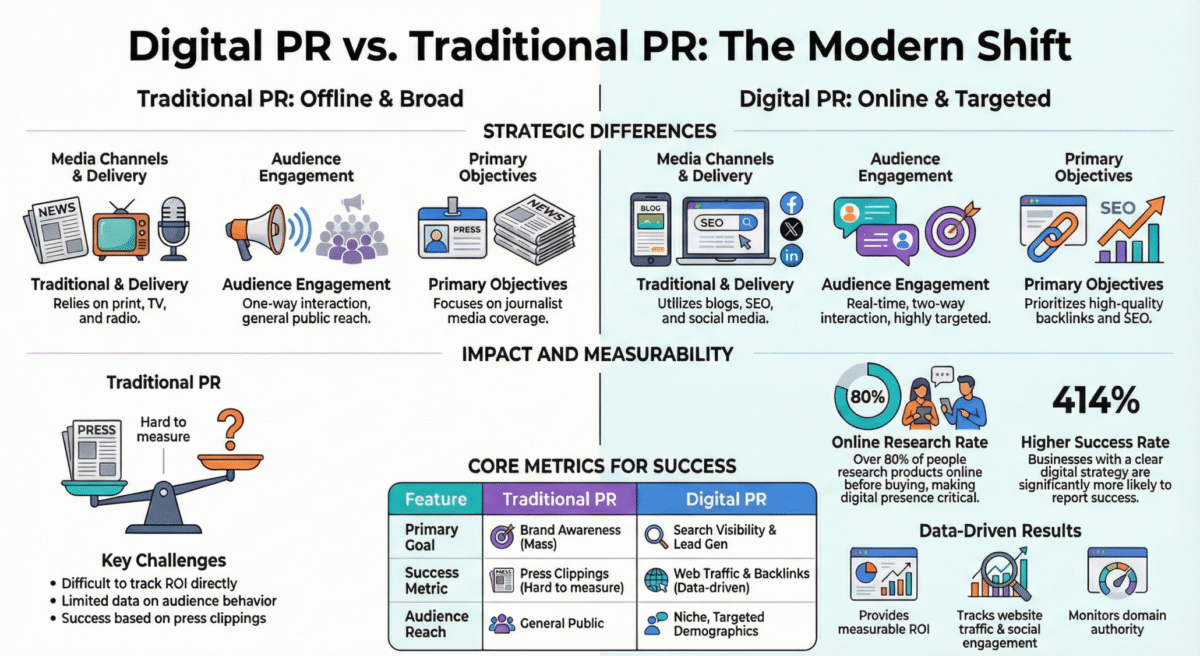
Digital PR just takes that foundation and moves it online, using social media, blogs, websites and online publications to get a brand’s message out there.
Unlike traditional PR though, which relies on established channels like TV, print media and in-person events to reach the masses, digital PR uses search engines and social media to create a measurable impact.
Traditional PR is more focused on making journalist friends for media coverage and doesn’t have a lot of metrics to measure success by, whereas digital PR gives you measurable results through online metrics like website traffic and social media engagement.
The shift from traditional press releases to online content marketing, social media and online reputation management is all about changing consumer behaviour.
Digital PR builds relationships, engages with audiences in real time and influences public perception – all the while giving you a chance to reach more people in a super targeted and measurable way.
The Essential Pieces of a Digital PR Strategy
A successful digital PR strategy needs several elements working together to make your business goals happen. Here are the must-haves for any effective digital PR campaign.
1. Goals and Objectives
Every successful digital PR campaign starts with clear goals that you can measure. Whether you’re looking to grow brand awareness, improve your search engine rankings or generate leads, setting specific objectives lets you track progress and make changes to future campaigns.
Research suggests that businesses with a clear strategy are 414% more likely to report success.
2. Who You’re Talking To
Digital PR lets you chat directly with the people who are most likely to buy from you, using data-driven insights to get inside their heads. Use analytics tools to work out demographics, interests and online behaviour and then tailor your brand message to fit their needs across different online platforms.
3. Creating and Publishing Content
Your content is the stuff that positions your brand as a thought leader and gives you stuff to share for online coverage. Social media sites like Instagram, LinkedIn and X let you share your digital PR content directly with your audience, which helps it get seen and engaged with.
Publishing quality content on your own website and getting it featured on high-authority sites gets you valuable backlinks that improve your search engine rankings. Ahrefs Research shows that pages with more backlinks consistently rank higher in search results.
4. Partnering with Influencers and Doing Outreach
Digital PR involves building relationships with influencers and key publications to get your brand seen. Influencer marketing can be simple, like a popular industry figure reviewing your product, or more involved, like co-created content or brand ambassadorships. Doing regular media outreach is key to making lasting relationships with journalists and getting your business featured in media outlets.
5. Keeping an Eye on Online Reputation Management
Getting a feel for what’s working and what’s not is key to measuring the success of your digital PR campaign. You can use tools like Google Analytics and social media insights to track key metrics and see how effective your campaign is.
Social listening tools let you engage with your audience in real time by keeping an eye on social media platforms, so you can respond quickly to both opportunities and challenges. Media monitoring tools also help you track where your brand is being mentioned online and see how your PR strategies are working.
How Do You Choose the Right Digital PR Tools?
The right digital PR tools can make a huge difference in how efficiently and effectively your campaign runs. Here are the key categories of tools that every digital PR pro needs to be thinking about:
1. Media Contact Databases
Tools such as Cision and Muck Rack can help identify and connect with journalists, bloggers and media outlets; while these platforms will streamline outreach by providing verified contact information and journalist preferences in one place.
2. Media Monitoring and Analytics
Meltwater and Mention are just a couple of examples of tools which track media coverage right across online channels and give you some real insights into how visible your brand is and how well your campaigns are performing. This information can be used to measure ROI and to inform future campaigns, making sure you’re always making the best use of your budget.
3. Social Listening Tools
Brandwatch and Sprout Social are just two social media listening tools that help keep track of what people are saying about your brand, industry trends and competitor activity on social media. This gives you the ability to keep up with what consumers are talking about and adapt your digital PR strategy accordingly.
4. Content Creation and Distribution
BuzzSumo helps identify trending content and influential publishers while PRWeb distributes press releases to major online publications – its a classic PR tactic for announcing important news that’s directly related to your business.
The Benefits of Digital PR for Your Business
The benefits of digital PR extend far beyond just getting media coverage in the traditional sense. Here’s how digital public relations and online public relation efforts can really make a difference to your business:
1. Builds Trust and Credibility
And another huge advantage of digital PR is that it helps build trust and credibility with your target audience. When a reputable website publishes an article mentioning your brand – it does wonders for your reputation and makes people more likely to trust your brand. Research studies can be an especially effective way to get media attention while positioning your brand as a thought leader in your industry, all of which can help build loyalty with your existing customer base.
2. Increases Online Visibility and Reach
Digital PR involves getting your brand featured in all sorts of online publications to increase your online visibility and reach a wider audience; this is especially important for SEO as high-quality backlinks can really improve your search rankings.
According to research from Backlinko, high-quality backlinks remain one of Google’s top three ranking signals. By implementing a strong digital PR strategy, you can get your brand noticed in competitive markets and build a loyal following while also improving your search engine rankings.
3. Helps Manage Your Online Reputation
Digital PR plays a really important role in protecting and enhancing your brand’s reputation – and getting ahead of any negative reviews or comments is crucial. Proactive reputation management strategies can really help to mitigate the impact of any negative reviews by building a strong foundation of positive online coverage. By engaging with your audience through two-way conversations, you can boost brand awareness and foster real loyalty with your customers.
4. Drives Traffic and Leads To The Website
When done right, digital PR can also drive traffic to your website through strategic content marketing and link building. The key performance indicators for measuring the success of a digital PR campaign are website traffic and social media engagement – and when all goes well, you can generate qualified leads by driving traffic to your own website through online media placements.
5. Builds Relationships with Influencers and Journalists
Digital PR really helps you build valuable relationships with influencers and media outlets that pay dividends over time – and these connections give you a steady stream of opportunities for online coverage. These relationships can really help you establish your brand image in the digital space and help your business adapt to changing consumer needs and trends.
Digital PR Services and Agencies
Working with a reputable digital PR agency can give you access to established media relationships and specialized expertise that really accelerates results. A good digital PR agency will typically offer a range of services including media outreach, content creation, influencer partnerships, link building and reputation management.
Digital PR services are often integrated with other digital marketing strategies like SEO and content marketing for maximum impact – and there are often niche specializations within the industry too, such as automotive digital PR which focuses specifically on manufacturers, dealerships and automotive brands, using industry-specific tactics and media relationships.
How to Choose a Digital PR Agency
Choosing the right partner is so important for digital PR success – so here are a few things to look out for:
- Experience and expertise: Look for agencies with a proven track record in digital PR and a portfolio that demonstrates results.
- Track record of success: Request case studies and client testimonials that show measurable outcomes.
- Industry understanding: Choose an agency that’s familiar with your market, competitors and target audience.
- Transparent reporting: Ensure they provide clear metrics and regular communication on campaign performance.
The terms “digital PR agency” and “digital PR firm” are often used interchangeably – but sometimes “firm” will imply a bigger, more established organization with broader capabilities, while “agency” might suggest a more agile, specialized team. Regardless of terminology, focus on finding a partner whose marketing strategies align with your business goals.
Practical Examples of Effective Digital PR
To really get a feel for how these strategies work in practice, it can be helpful to look at some examples of digital PR in action. Successful digital PR campaigns often combine multiple digital PR tactics for maximum impact:
- Data-Driven Studies: Brands like Spotify’s “Wrapped” campaign create shareable research that earns extensive media coverage and social media engagement – showing just how well digital PR can generate organic buzz.
- Newsjacking: Commenting quickly on trending topics can really help brands get press features on high-authority websites. This tactic shows just how important agility and relevance are in digital PR.
- Interactive Content: Creating tools, calculators or quizzes that provide value to users can really encourage backlinks from relevant blogs and online publications – while also driving traffic to your website.
These digital PR examples show just how combining creative content with strategic distribution across digital platforms can deliver really significant results for increasing brand awareness and improving search engine rankings.
Conclusion
Digital PR is no longer something you can live without if you want to keep on top of building brand awareness, boosting your online presence and getting real business growth in the digital space. By combining tried and true PR methods with the latest digital channels, you’ll be able to reach your target audience more effectively and get some actual numbers to show for it.
Ready to shake up your online marketing game? Yeah well, time to give Levy Online a call at (702) 749-4963 and see just how they can take your brand’s visibility and drive some real results for you.
Frequently Asked Questions
How can digital PR help improve my website’s SEO and search engine rankings?
Digital PR basically improves SEO by getting quality backlinks from good sites – think of it like getting an endorsement from someone who’s actually got credibility. When online publications that people respect link to your site, it tells Google (and the rest of the search engines) that your content is worth reading, and that boosts your website’s authority and search engine rankings. Plus, the more people talking about you online – whether it’s brand mentions or organic searches – the stronger your rankings will get over time.
What are the key things you need to measure when it comes to the success of a digital PR campaign?
So, what are the key metrics for measuring the success of a digital PR campaign? For starters, you want to look at website traffic coming from other sources, the number and quality of backlinks you’re getting, how much your domain authority has changed, social media engagement (likes, shares, reach) as well as the volume and tone of brand mentions, your search engine rankings for key words and of course, how many actual leads you’re getting. And you can use Google Analytics, Ahrefs and social media insights to keep an eye on all of that.
How much is a digital PR agency going to cost you?
Digital PR agencies can vary a lot in terms of cost – and it really depends on what you’re looking for, what industry you’re in, and how well-known the agency is. Typically you can expect to pay anywhere from $3,000 to $20,000 per month for a comprehensive campaign. Some agencies will do project-based pricing for specific things like a product launch or a link building campaign. And the thing is, when you’re looking at the cost – you also need to think about the return on investment – in terms of better brand visibility, better search rankings and more traffic to your site.
What digital PR tools do businesses commonly use?
Well, it’s things like media databases for finding journalists to contact – like Cision and Muck Rack, tracking tools like Meltwater for keeping an eye on coverage, social listening tools like Brandwatch, content research tools like BuzzSumo, press release distribution services like PRWeb and analytics tools like Google Analytics and Ahrefs for measuring the impact of a campaign and how well it’s doing online.